
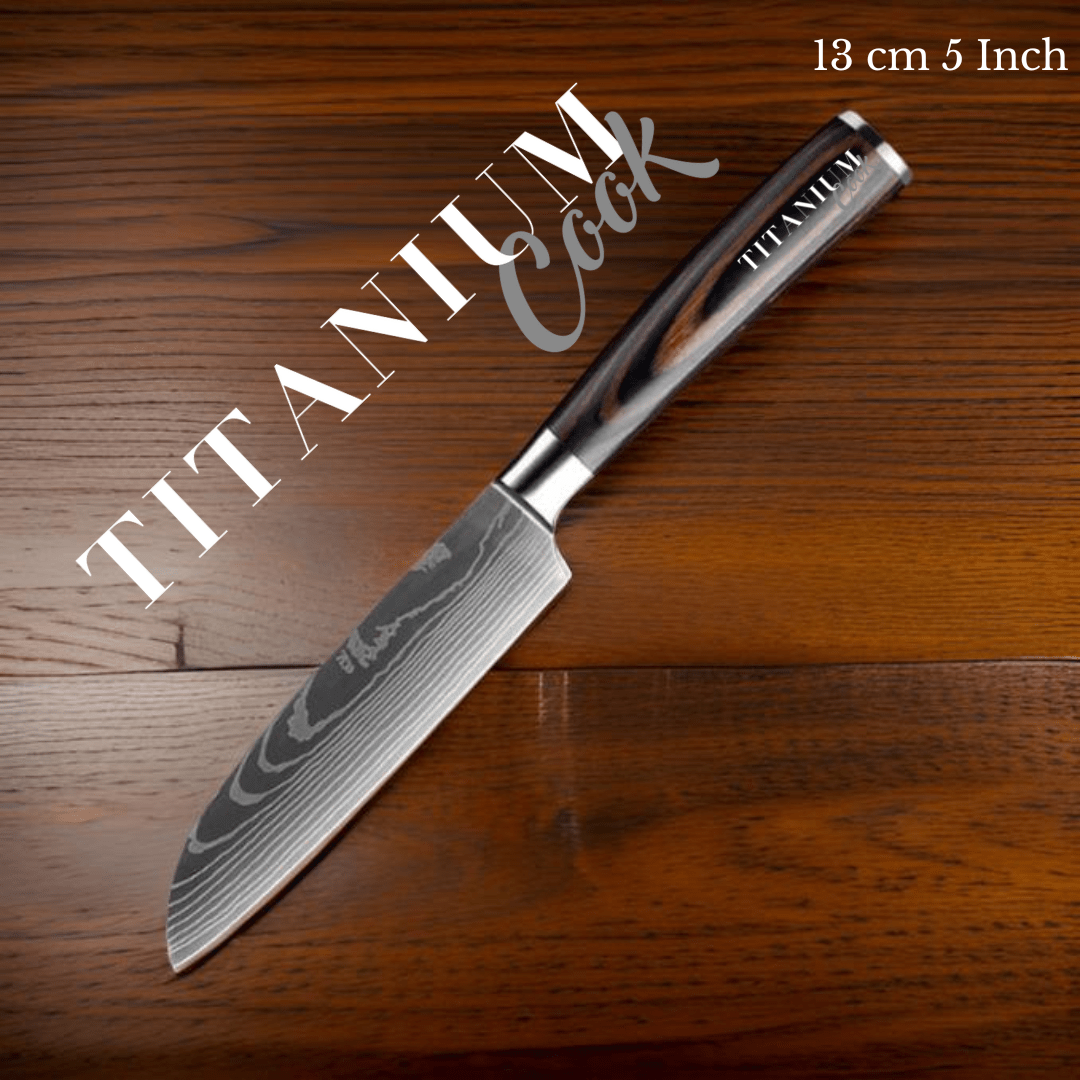
A good knife changes the way you cook: cleaner cuts, less effort, more precision. But between santoku, chef knife, nakiri, Damascus, stainless and carbon steel, it is easy to get lost. Here are answers to the questions people ask most.
30% off your first order with code BIENVENUE30, valid sitewide.
Santoku or chef knife: which is best for beginners?
Both are versatile and cut meat, fish and vegetables. The difference lies in shape and technique:
- The santoku: shorter, wide, flat blade. It is used with a push-cut motion, is light and easy to control. The simplest choice for a first Japanese knife.
- The chef knife: longer, more curved blade made for a rocking motion. Great for fast mincing and large volumes, with a little more of a learning curve.
If you mostly cook for 2 to 4 people on a standard worktop, start with a santoku, for example the Kaito santoku.
What blade length should you choose?
- Santoku: 16 to 18 cm (6.3 to 7 in) for compact everyday cooking.
- Chef knife: 18 to 21 cm (7 to 8.3 in), 20 cm in most kitchens.
- Paring or utility knife: 10 to 15 cm (4 to 6 in) as a second knife for small jobs.
The smaller your hands or your worktop, the more comfortable a shorter blade will be.
Nakiri, kiritsuke, bread knife: what are they for?
- Nakiri: rectangular blade that slices vegetables flat without crushing them.
- Kiritsuke: tall pointed blade, versatile for fish and vegetables, more technical.
- Paring knife: peeling, coring, precision work.
- Bread knife: serrated blade for crusts and pastries.
- Boning and slicing knives: preparing and carving meat and fish.
Damascus, stainless, carbon steel: which to choose?
Damascus refers to a pattern created by layering steel. It is not a separate type of steel: what matters most is the blade steel and how you care for it. For a first knife, stainless steel is the simplest: it handles moisture better and needs little care. Carbon steel cuts very finely but rusts if left wet. You will find the steel of each series on its product page.
Knife set or single knife?
A Japanese knife set (2 to 10 pieces) equips the whole kitchen at once and usually costs less than buying knives one by one. To start, a chef + santoku + paring trio covers the essentials. Browse the full range in our Japanese knife collection.
How to care for a Japanese knife
- Wash by hand and dry straight away.
- No dishwasher: heat and knocks damage the edge.
- Never cut on glass, granite, ceramic or steel: the blade dulls very quickly.
- Do not cut bones or frozen food.
- Store on a magnetic strip or in a block.
- Realign the edge regularly with a honing steel, and sharpen on a stone when it cuts less well.
Frequently asked questions
Does a titanium cutting board damage knives?
It is a fair question, since the cutting surface wears the blade. We answer it in detail in our article Are titanium cutting boards safe? Our titanium cutting board is designed to go with your knives every day.
Is a Japanese knife fragile?
It cuts very well but dislikes knocks and twisting. Used to slice, not to pry or crush, it lasts a long time.
What is the best everyday knife?
A 16 to 18 cm santoku or a 20 cm chef knife. Both do 90% of the work; the rest comes down to taste and technique.
Your welcome offer
30% off your first order with code BIENVENUE30, entered at checkout. Free shipping and a 30-day money-back guarantee. Shop the knives.

Leave a comment
This site is protected by hCaptcha and the hCaptcha Privacy Policy and Terms of Service apply.